Jack's Guide to: Tokyo

Larissa Shearman
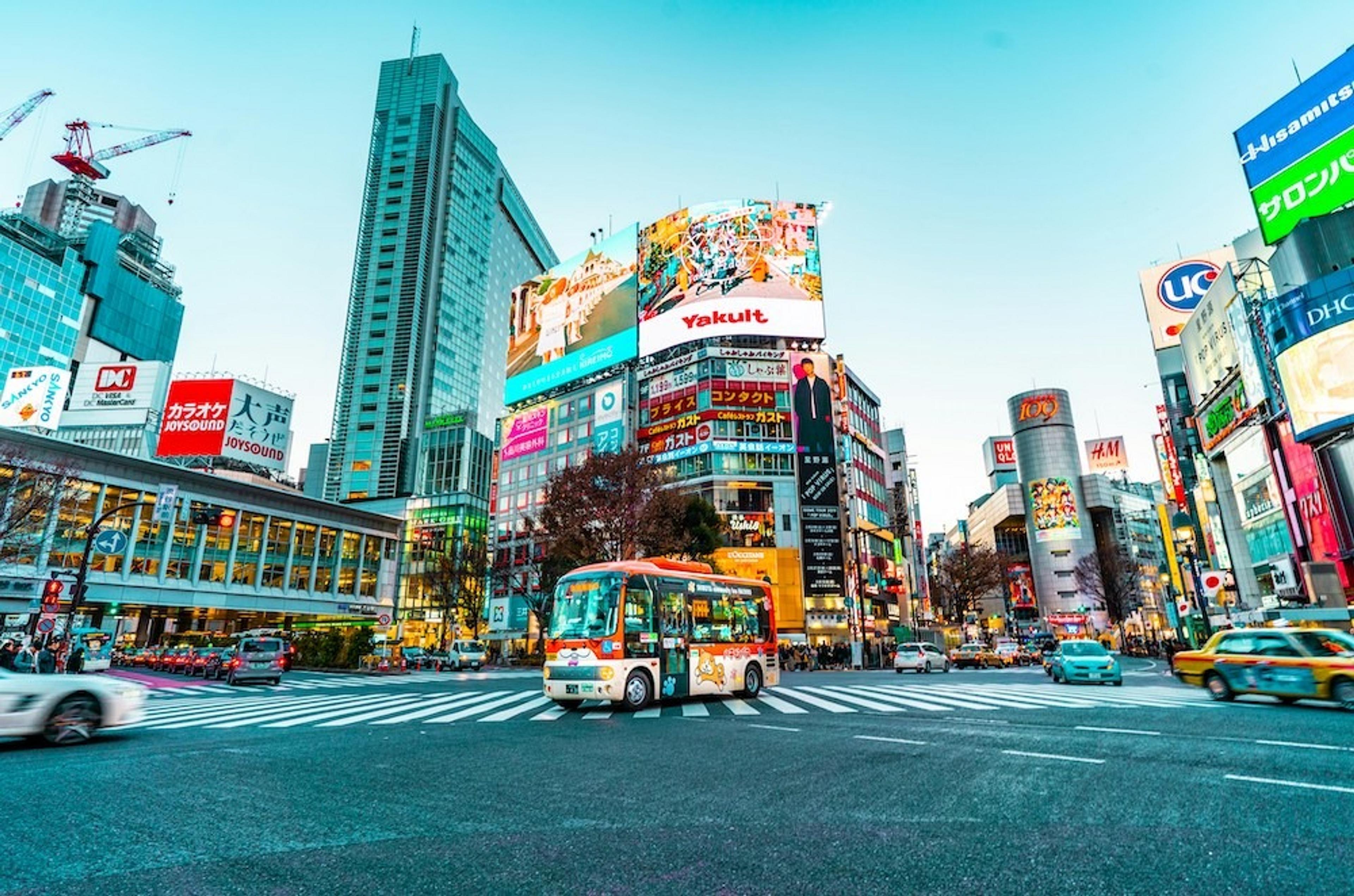
Tokyo is a massive metropolis (in every sense of the word) – it’s the third-most populous city in the world, in parts a concrete and neon jungle, in others you’ll find tiny shrines and quiet backstreets flanked by high-rise apartments.
It has 23 wards, each with its distinct culture and atmosphere. You may have heard of names like Chuo, Shinjuku, Shibuya or Taito, each with their own neighborhoods. It’s the kind of city where you could spend weeks on end and not see everything on your list.
I scored a return trip from London via Copenhagen to Tokyo for under £450, and I spent 5 full days traversing the city. Read on for my tips on how to make the most of your time (and where to get the best ramen) in town.
A quick note on the links in this guide: we’re not affiliated with any of the external sites included in this guide, so we’re not getting any kick-backs or commission. We’ve only included resources we think will genuinely be useful to help you decide if this destination is for you.
Getting there
Tokyo is a major transport hub, so it’s usually easy to find flights from around the world.
Japan has 2 major airlines that fly from Europe and North America to Tokyo: Japan Airlines (JAL) and All Nippon Airways (ANA). Both offer non-stop flights from large hubs like London, Paris, Frankfurt, Munich, Stockholm, New York, LA, San Francisco, Vancouver, Chicago, Boston and Dallas. ZipAir Tokyo is a budget option for non-stop flights from the West Coast of the US.
Most flagship airlines offer non-stop flights to Tokyo as well, like British Airways, Lufthansa, KLM, SAS, Air Canada, Delta, American Airlines and United Airlines. However, the cheapest way to get there is usually to take connecting flights, especially via China.
Here’s a handy guide on what to expect from Jack's Flights when booking your flight to Tokyo:
From Europe:
- Expected average price range: €470s-€670s
- How many cheap flight alerts we’d expect in a year: 15+
- Lowest price we’ve ever seen: €300 rtn
From the UK:
- Expected average price range: £350s-£530s
- How many cheap flight alerts we’d expect in a year: 20+
- Lowest price we’ve ever seen: £338 rtn
From the USA:
- Expected average price range: $570s-$890s
- How many cheap flight alerts we’d expect in a year: 20+
- Lowest price we’ve ever seen: $257 rtn
From Canada:
- Expected average price range: $770s-$1200s
- How many cheap flight alerts we’d expect in a year: 15+
- Lowest price we’ve ever seen: $678 rtn

By train
If you’ve arrived in another city in Japan, you’ll likely catch the Shinkansen (bullet train) and/or JR Rail (the national rail service) to Tokyo.
Shinkansen tickets are typically pricey, but they make up for that with exceptional service and speed – you’ll be able to get from Osaka/Kyoto to Tokyo in less than 3 hours. As of 2025, ticket prices are around:
- 14,920 JPY from Osaka (approx. $100/£75)
- 18,380 JPY from Hiroshima (approx. $125/£95)
- 11,500 JPY from Nagoya (approx. $80/£60)
- 13,320 JPY from Kyoto (approx. $90/£70)
You can buy Shinkansen tickets from major stations in these big cities (via machine or ticket counter), or you can pre-book online via the official website.

Larissa's Pro Tip
Ekiben are bento boxes that you can buy in stations to eat on the go. You'll find them both before and after ticket gates, but if you're traveling from Tokyo Station, there's plenty of choice in the food court area of Daimaru, a shopping center attached to the station.
Seasonality
Japanese culture is in tune with the changing seasons, with thousands of festivals and celebrations that line up with the calendar. In terms of weather, central cities like Tokyo, Kyoto, Osaka and Hiroshima are fairly similar throughout the year, but Tokyo's festivals and events are part of what gives the city its own unique buzz.
Spring — March–May
Temperature: 5–23°C/41–73°F
Cherry blossom season in late March–April is the most popular time for visitors to descend upon the Japanese capital. All the top Sakura spots will be seriously busy with selfie-stick wielding tourists and locals alike.
If you want to take in the blossoms the authentic Japanese way, get familiar with the art of hanami, aka picnicking under the cherry blossom trees. Look out for all the seasonal Sakura-flavored snacks and treats on offer, too.
Summer — June–August
Temperature: 25–36°C/77–97°F
Prepare to feel sticky. If you visit Tokyo in summer, the humidity will be above 70%, and June to mid-July is considered the rainy season, and then typhoon season kicks in until October. That means it’s worth packing light layers and a rain jacket, as well as sunscreen and a hat.
Despite the somewhat challenging weather, summer is still buzzing with festivities. Matsuri take place throughout July and August, so expect parades, fireworks competitions and taiko drummers to appear at any moment.

Fall — September–November
Temperature: 10–25°C/50–77°F
As September winds down, so does the oppressive summer heat. And with cheaper flight prices and fewer crowds post-summer, autumn is a pretty great time to visit. The fiery autumn foliage that turns Tokyo red around November is becoming nearly as popular as the cherry blossoms, so keep this in mind if you're looking for a budget-friendly trip.
Once again, there are plenty of festivals to catch at this time of year. Expect parades of portable shrines, and flashes of colourful dancing whirling through the streets.
Winter — December–February
Temperature: 5–12°C/41–54°F
I visited Tokyo in February 2025, so I have a particular fondness for this time of year! The majority of my days there were sunny, but I still needed my scarf and a winter coat. It was decent sightseeing weather, but we did have to wrap up at times.
Winter in Tokyo brings with it citywide illuminations to brighten up the long, cold nights. Everywhere from store fronts to parks and racecourses get in on the glow. It shouldn't be surprising to learn that you may also spot a German-style Christmas market or two on your December travels as well.

Travel Style
Tokyo may be big and bustling, but it's also super safe, clean, and easy to get around. But like any big city, there are some areas of Tokyo, like Kabukicho or Roppongi, where there is a higher risk of pickpocketing and general antisocial behavior. So, keep your wits about you regardless.
LGBTQI+ travelers should feel safe and welcome in Tokyo. You will find lots of LGBTQI+ friendly bars, clubs, and businesses in places like Shinjuku/Ni-chome and Nakano in particular.
Getting around
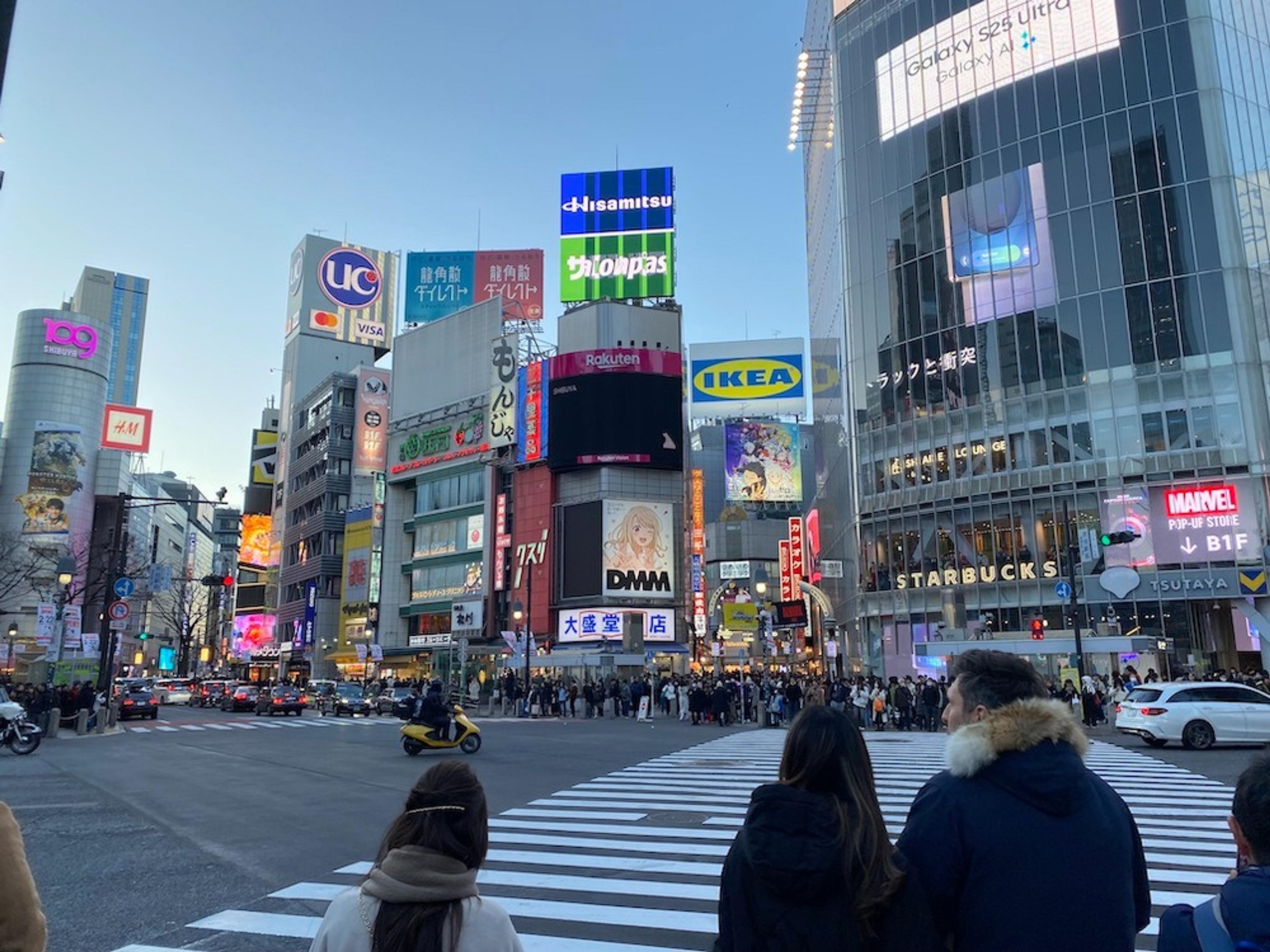
Tokyo has one of the most extensive public transport systems you might encounter anywhere in the world — no surprise when it has to move millions of people a day.
As with all public transport in Japan, there are certain customs which are seen as normal on the metro but may seem strict in comparison to what you experience at home:
- No talking loudly/playing music on the train, and keep your phone on silent
- There are no rubbish bins in the station (or on the streets), so take your rubbish with you back to the hotel
- No eating/drinking on the train (unless you’re on the Shinkansen)
- Women-only cars are active during peak hours
- Wait in an orderly line on the platform when waiting for the train (you’ll likely see arrows on the ground)
- Keep your bag in your lap, and be aware of your surroundings
Metro and suburban trains
The crowning feature (and the one you’ll likely use most often) is the metro. It’s extensive, with 142 stations spread across the metropolitan area. The most popular stations include:
- Ginza (Ginza Line, Hibiya Line, Marunouchi Line)
- Asakusa (Asakua Line, Ginza Line)
- Ueno (Ginza Line, Hibiya Line)
- Shibuya (Ginza Line, Fukutoshin Line, Hanzomon Line)
- Shinjuku (Shinjuku Line, Marunouchi Line, Oedo Line)
It’s quick, clean, efficient (the norm in Japan) and runs throughout the day from 5am until around midnight. It’s also fairly cheap, with a ride typically costing between 180 and 324 JPY, depending on the distance. You can buy tickets from ticket machines at each station (in denominations from 180 JPY to 330 JPY), or use your preloaded IC card. You can put money on your IC card directly in your phone’s wallet (if you have the e-version of the card, which is exclusive to Apple phones), or via the ticket machine with cash (or debit/credit card).
Using Google Maps is your best bet for navigating the metro, as it has extremely easy-to-understand way finding features. It’ll tell you which exit you’ll need to take, which carriage you should travel in, and which color line you’re transiting on.
To get to places like the Ghibli Museum or Disneyland, you’ll need to jump on a suburban train instead. Functionally, there isn’t any difference between this and the metro in terms of your tickets (IC card works across both) or the way you navigate it. The only difference is that you’ll have to catch these trains from major stations, like Tokyo Station, and the platforms are usually above ground, instead of underground like the metro platforms.

Buses
Similarly to the metro, the Tokyo bus network is extensive. To use the bus, you find the bus stop and stand in an orderly line behind those who arrived before you. In busy areas, there will be lines on the pavement to direct you.
Once the bus arrives, you jump on through the back door. If you’re paying with cash, you’ll need to take a ticket from the box near the door; otherwise you’re fine to just sit down. The normal rules apply here — if the bus is too busy, offer your seat to those around you who may need it more than you. If you’re standing, hold on to the handrail.
When you reach your stop, press the button and get your payment ready — you’ll pay when you leave the bus (via the front door). You can pay with your IC card by tapping it as you leave (via the front door), or with change. Keep in mind, the driver can’t break notes over 1000 JPY.
Area Guides
Let’s get one thing out of the way—Tokyo is a megacity (a city made up of cities). Your experience will heavily depend on where you spend your time. We’ve chosen to focus on the following areas because they will likely be on your radar when you plan your trip, but you could have an equally good time (and completely different experience) if you never step foot in these areas.
First decision: which area should you stay in in Tokyo? To be in the middle of the action, pick accommodation in Ginza, Shinjuku, or Harajuku. If you’d rather be in a quieter spot (there’s not really a ‘quiet’ spot, mind you), a place like Asakusa or Minato will likely suit you better. Here’s a really good guide on different areas of the city and how to make your choice.
Shibuya
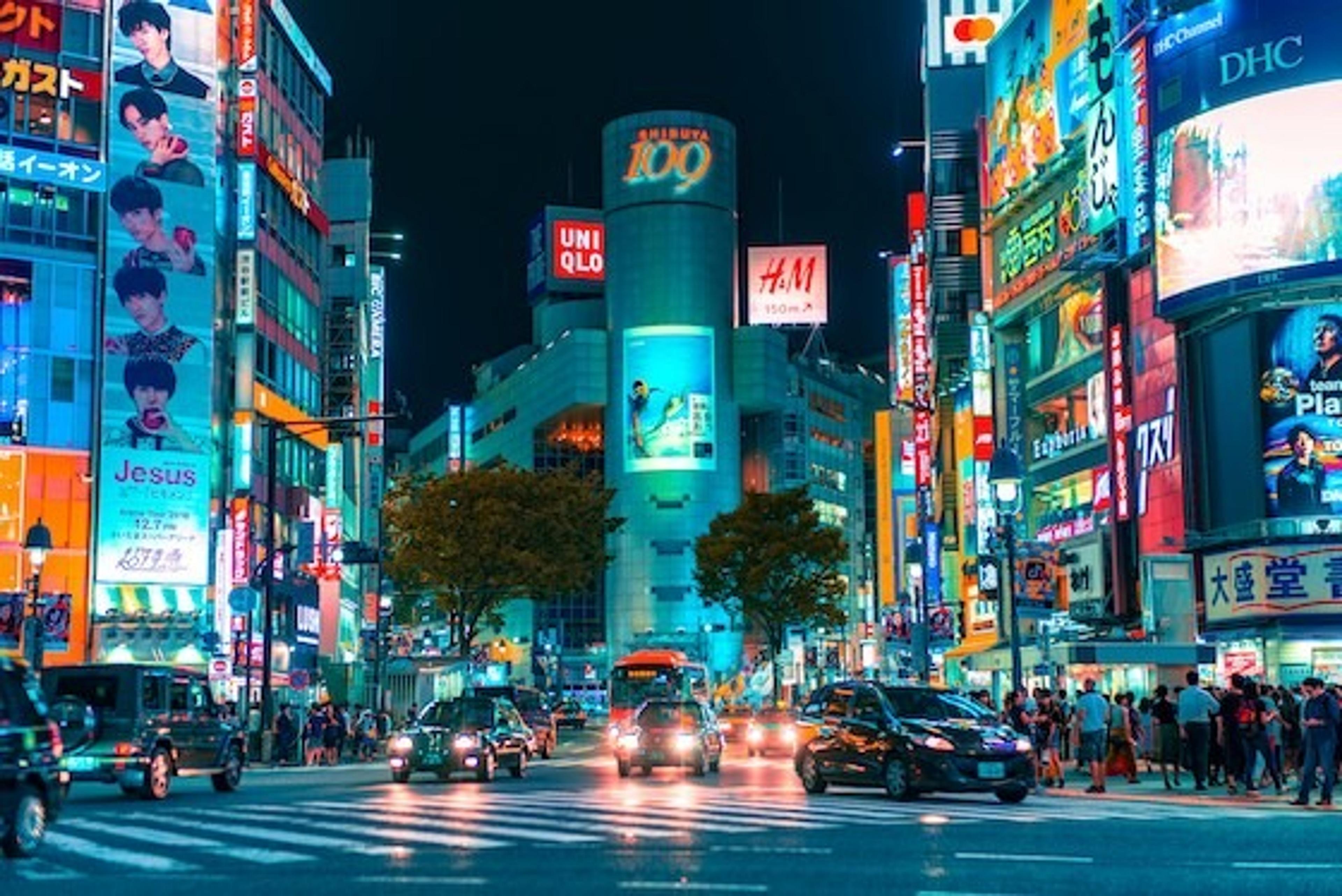
Ah, did you even visit Tokyo if you didn’t partake in the Shibuya Scramble? The ultra-busy intersection is now one of the city’s top tourist spots, rivaling Tokyo Tower.
This should give you a pretty clear idea of what it’s like to visit—it's big, and there are so many people. That’s what makes it a spectacle; it’s also what makes it extremely overwhelming to visit. You may have heard that the Starbucks is a ‘hacky’ way to enjoy the view of the Scramble, as you don’t need to pay an extortionate fee to watch the crossing. Unfortunately that ‘secret’ has been around for a decade, and now you’ll have to line up for an incredibly long time for your coffee and the pleasure of a window seat. We couldn’t see an alternative worth spending our cash on, so we opted out of seeing the crossing from above.
Outside of visiting to people watch, shopping is the real reason you’d be here. You’ll find towers and towers of shopping malls. Stores of all sorts are here, including the most famous location of Don Quijote (Donki), a well-known variety store. You can buy anything there—literally anything: from a diamond ring to an extra suitcase, viral skincare to strawberry KitKats. The novelty of the store wears off fairly quickly, even to the most seasoned shopper, and we found products can generally be overpriced. Most things you’d want to buy at Donki are available for cheaper at konbinis (convenience stores), supermarkets, or pharmacies.
Shinjuku
You’ll likely read things about Shinjuku in your research that might put you off visiting at first. It’s the closest thing Tokyo has to a ‘red light’ district; it’s full of bars, pachinko parlors, and late-night video games. And if you’ve got small kids, you probably won’t get much out of visiting.
I spent one evening in Shinjuku hunting down a ramen restaurant (it was fine, but we’d had better during the trip). Once we emerged from eating, we were overwhelmed by the flashing neon and didn’t feel pulled in a particular direction, so we headed back to the hotel. That being said, it is probably the right place to go if you want to immerse yourself in Japanese arcade games or stay up through the small hours.
Harajuku
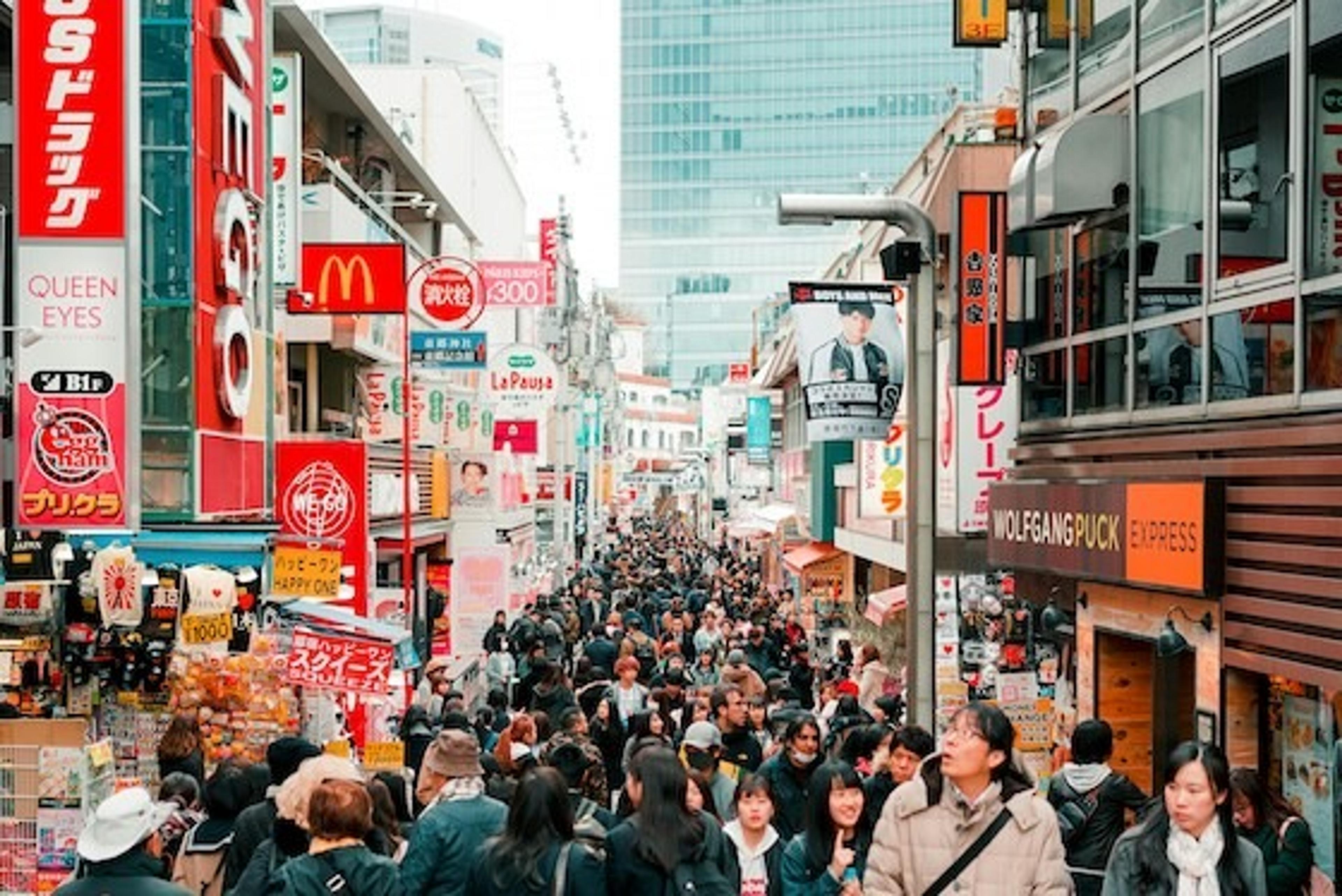
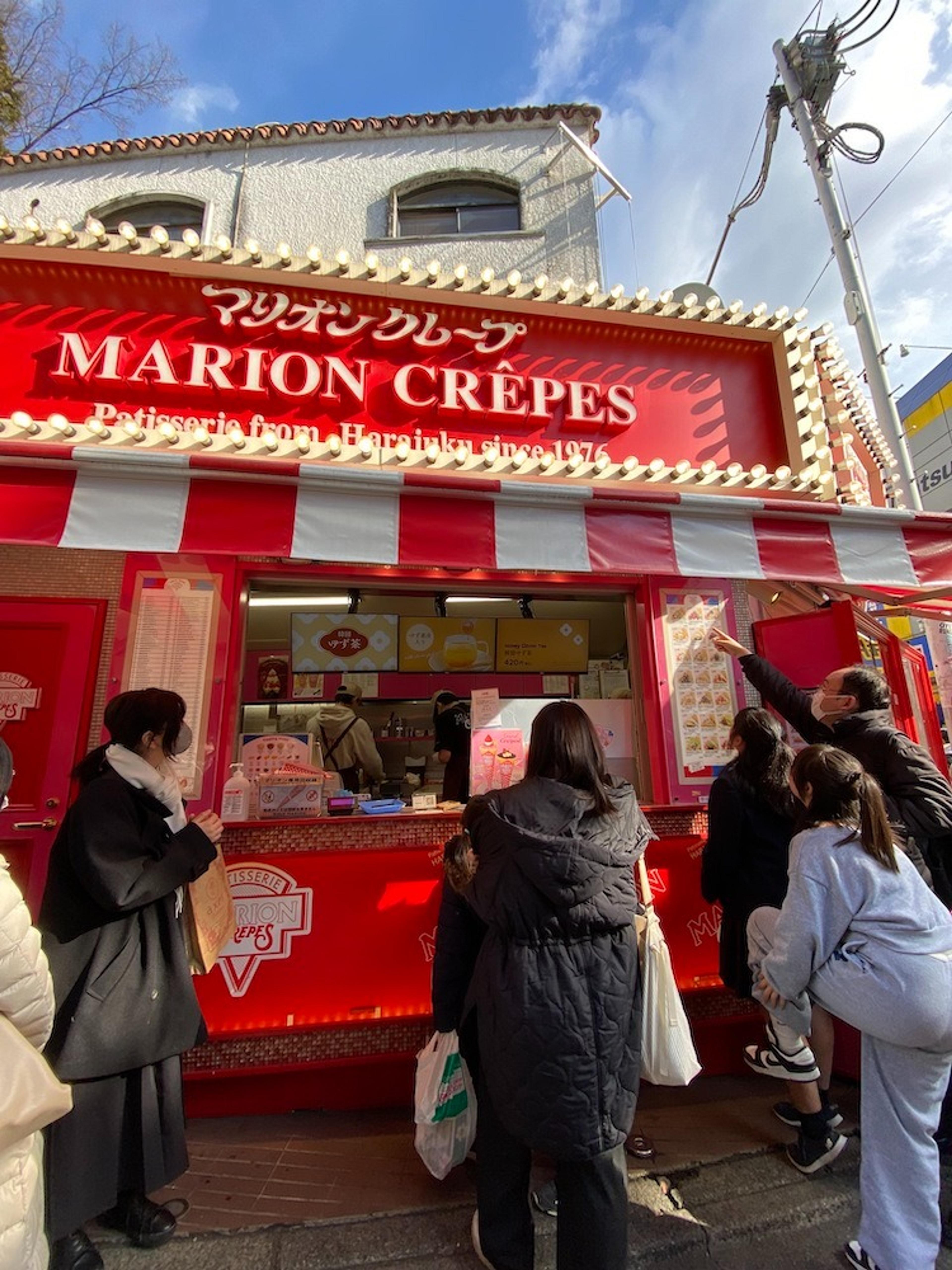
Harajuku is another shopping district, but instead of the 9-story department stores, here you’ll find streets and streets fashion of boutiques and accessories. It’s where the kawaii (cute) culture was born, so you’ll find all the accessories, plush toys, and anime-inspired outfits to go with it. It’s an area that definitely draws a younger crowd, both tourists and locals alike. Plus, a lot of viral food is for sale here, like rainbow grilled cheese sandwiches and blue ramen. I’m not suggesting you eat any of that; I think you’ll be disappointed. But if you do want to try something there, Marion’s Crepes were delicious, if a little pricey.
It might go without saying, but Harajuku is also extremely busy. When we were there, we were shoulder to shoulder with the crowd on Takeshita Street, and that does negatively impact your shopping experience!
Asakusa
One of the ‘quieter’ neighborhoods in the city, and where I’d recommend someone stay on their first visit to Tokyo.
We liked that it was well connected to the more ‘touristy’ parts of the city via the Metro, but there was also enough going on within walking distance of our hotel. The famous Senso-ji Temple gives the area a mixed feel between the traditional and the modern, and you’ll find plenty of restaurants, izakayas, and bars within 5–10 minutes of your hotel.
It’s also situated on the Sumida River, which does give a little respite from the concrete jungle of the vast majority of the city.
Food
A lot of what we now know as ‘Japanese’ food originated in Tokyo. That, alongside the fact it’s Japan’s biggest city, means you’ll be absolutely spoiled for choice for every single Japanese dish you want to try.
Here are a few that are known to be particularly good in Tokyo:
- Curry: served with rice or udon
- Monjayaki: pan-fried batter topped with cabbage, seafood (similar to okonomiyaki)
- Edomae sushi: the ‘typical’ sushi you’re probably familiar with, with raw seafood on rice
- Gyu-katsu: deep-fried beef cutlet (usually wagyu beef)

Larissa's Pro Tip
I lined up for about 45 minutes one evening to eat at Gyukatsu in Asakusa, and it was well worth it — you can even grill each piece of beef to your taste. They do have 2 locations within a 5-minute walk of each other, so it’s worth scoping out both lines to see which is shorter.
Tokyo also has the highest number of Michelin-starred restaurants in the world, covering not just Japanese cuisine, but also French, Chinese, Spanish and Indian. As with everywhere in Japan, Tabelog is where you should go for restaurant reviews and reservations. Any restaurant above a 3.5 rating should guarantee you a really good meal (these ratings are stricter in Japan than in other countries).
Street food
It’s worth noting that ‘street food’ in Japan isn’t quite the same as in other countries, as it’s considered rude to eat and walk. Because of this, you’re more likely to find shopfronts with proper seating, or casual pub-style spots called izakayas.
Memory Lane in Shinjuku is a place that comes highly recommended by travelers for its atmosphere and yakitori (grilled chicken skewer) shops. Otherwise, Nakamise Street in Asauka, Tsukiji Outer Market and the Takeshita Street in Harajuku have some street food stalls.
If you're looking for a little more than traditional foods like takoyaki (octopus balls), taiyaki (fish-shaped pancakes filled with red bean), and sweet sticky rice sticks called dango across the board, Harajuku is where you’ll find the latest viral food crazes as seen on social media.
If you do buy food from a shop with no seating, it’s either expected you’ll take it away to eat later, or you’ll eat it standing directly in front of the store you bought it from.
Convenience store food
There's no shortage of convenience stores in the country (7-11, Lawson, and Family Mart are the big three). You'd struggle to find a single street in a major metropolitan area that doesn't have one of these stores on it. Because of this, the food available here has become ubiquitous with a trip to Japan. It's almost a type of pilgrimage, where visitors scope out their favorite foods.
As well as the sheer number of stores, the quality of the food is impressive. You can find the usual snacks and drinks you'd expect anywhere in the world, alongside a surprising variety of baked pastries, hot food and take away meals. I'd recommend trying onigiri, katsu/egg sandwiches, and the melon pan from any of these stores.

Useful links
- Google Translate App
- Welcome Suica card (here’s how to get it on your phone)
- Tabelog - used for restaurant recommendations and booking