
Jack's Guide to: Kyoto

Larissa Shearman
If you’re planning a trip to Japan, Kyoto will likely be up there as one of the top cities on your list (typically along with Tokyo, Osaka, and Hiroshima). It’s within a few hours of Tokyo, making it an easy trip on the Shinkansen, but holds its own.
While it shares similarities with the capital (like fast-paced, sprawling neighborhoods, skyscrapers and temples galore), Kyoto’s history as the former Imperial court of the country and its long traditions of Geiko, Maiko and Kabuki Theatre, attract millions every year.
The city is split up into 11 wards, with the main ‘downtown’ areas around Kyoto Station and the Kawaramachi/Teramachi neighbourhoods. The Kamo River splits the city in half, with the main business district on the western side, and the more historical temples and neighborhoods on the eastern side (including Gion, one of the most popular neighborhoods). At the far west of the city, you’ll find the Arashiyama Bamboo Forest and Monkey Park, where macaque monkeys roam freely on Mount Arashiyama.
When I visited in February 2025, I found that while there are nowhere near the number of people in Kyoto that live in Tokyo, the city felt similarly busy in central touristy areas. I was also surprised by how spread out different attractions are, and how long it can take to move from one area of the city to the other, so that’s worth keeping in mind when you make your itinerary!
A quick note on the links in this guide: we’re not affiliated with any of the external sites included in this guide, so we’re not getting any kick-backs or commission. We’ve only included resources we think will genuinely be useful to help you decide if this destination is for you.
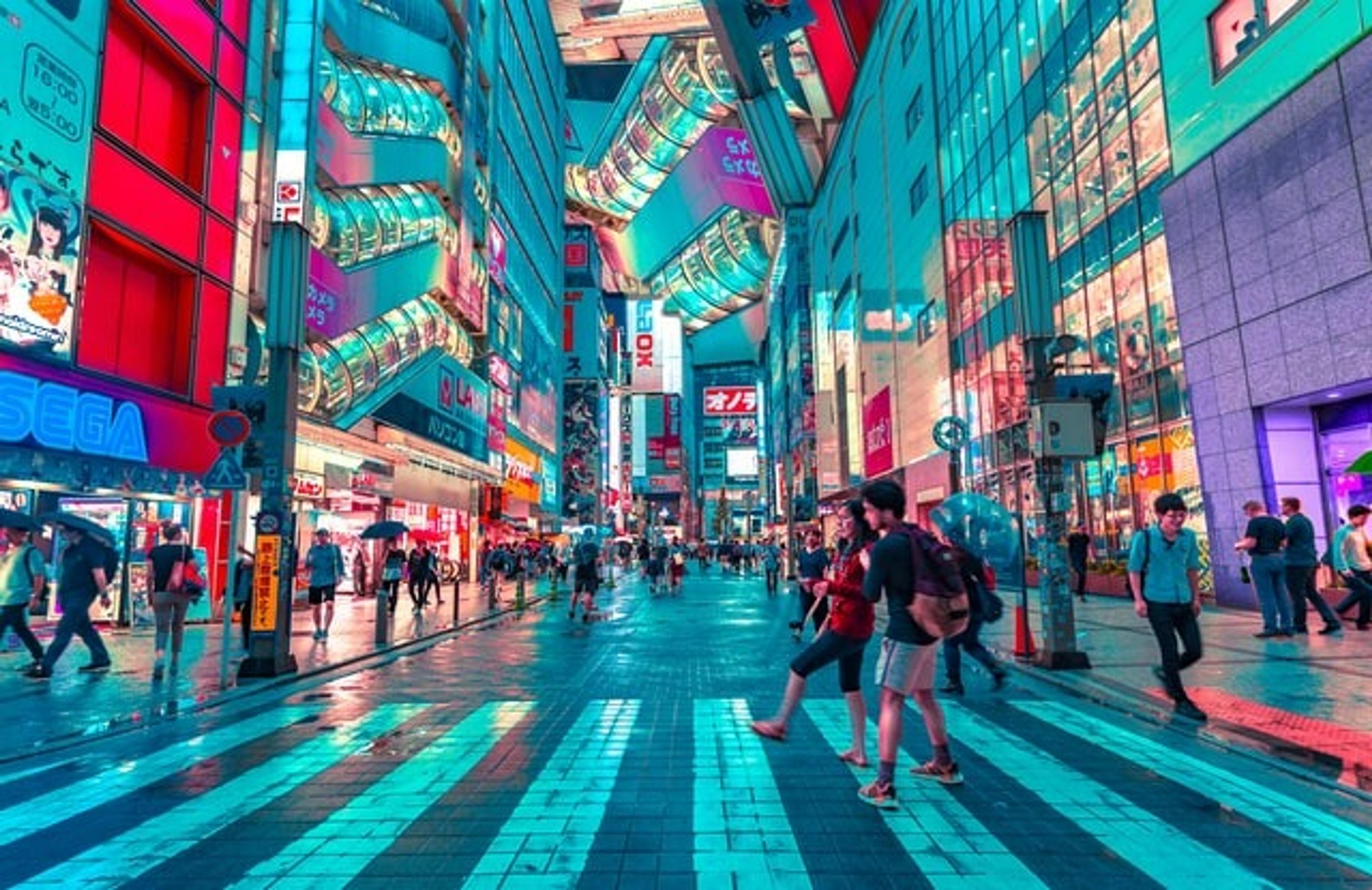
FYI: if you'd like to read more about public transport, visas, cash and currency, seasonality and my top tips on how to navigate Japan in general, check out my Japan guide. Or for tips about the vibrant capital city, head to my Tokyo guide.
Getting there
The closest airport to Kyoto is Kansai International Airport (KIX), which is actually closer to Osaka than Kyoto. Osaka and Kyoto are less than 1 hour apart (by car), and it takes about 90 minutes to get to Kyoto from KIX by public transport.
The options to fly to KIX airport directly are more limited than for Tokyo, but it’s still large enough where you’ll be able to fly direct from some cities, or via a connecting flight from almost anywhere.
You’ll find non-stop flights to KIX directly from these cities in Europe and North America:
- Paris (CDG) with Air France
- Amsterdam (AMS) with KLM
- Munich (MUC) with Lufthansa
- Helsinki (HEL) with Finnair
- San Francisco (SFO) with United
- Los Angeles (LAX) with JAL
- Vancouver (YVR) with Air Canada
As with Tokyo, you’ll find the cheapest 1-stop fares if you fly via China from the UK or Europe. From North America, the cheapest 1-stop option is usually via Tokyo.
Here’s our handy guide on what to expect when booking your flight to KIX airport:
From Europe:
- Expected average price range: €450-€650 rtn
- How many cheap flight alerts we’d expect in a year: 15
- Lowest price we’ve ever seen: €384 rtn
From the UK:
- Expected average price range: £400s-£480s rtn
- How many cheap flight alerts we’d expect in a year: 7-8
- Lowest price we’ve ever seen: £363 rtn
From the USA:
- Expected average price range: $580s-$750s RT
- How many cheap flight alerts we’d expect in a year: 10+
- Lowest price we’ve ever seen: $331 RT
From Canada:
- Expected average price range: $1000s-$1100s RT
- How many cheap flight alerts we’d expect in a year: 8-9
- Lowest price we’ve ever seen: $917 RT
By train
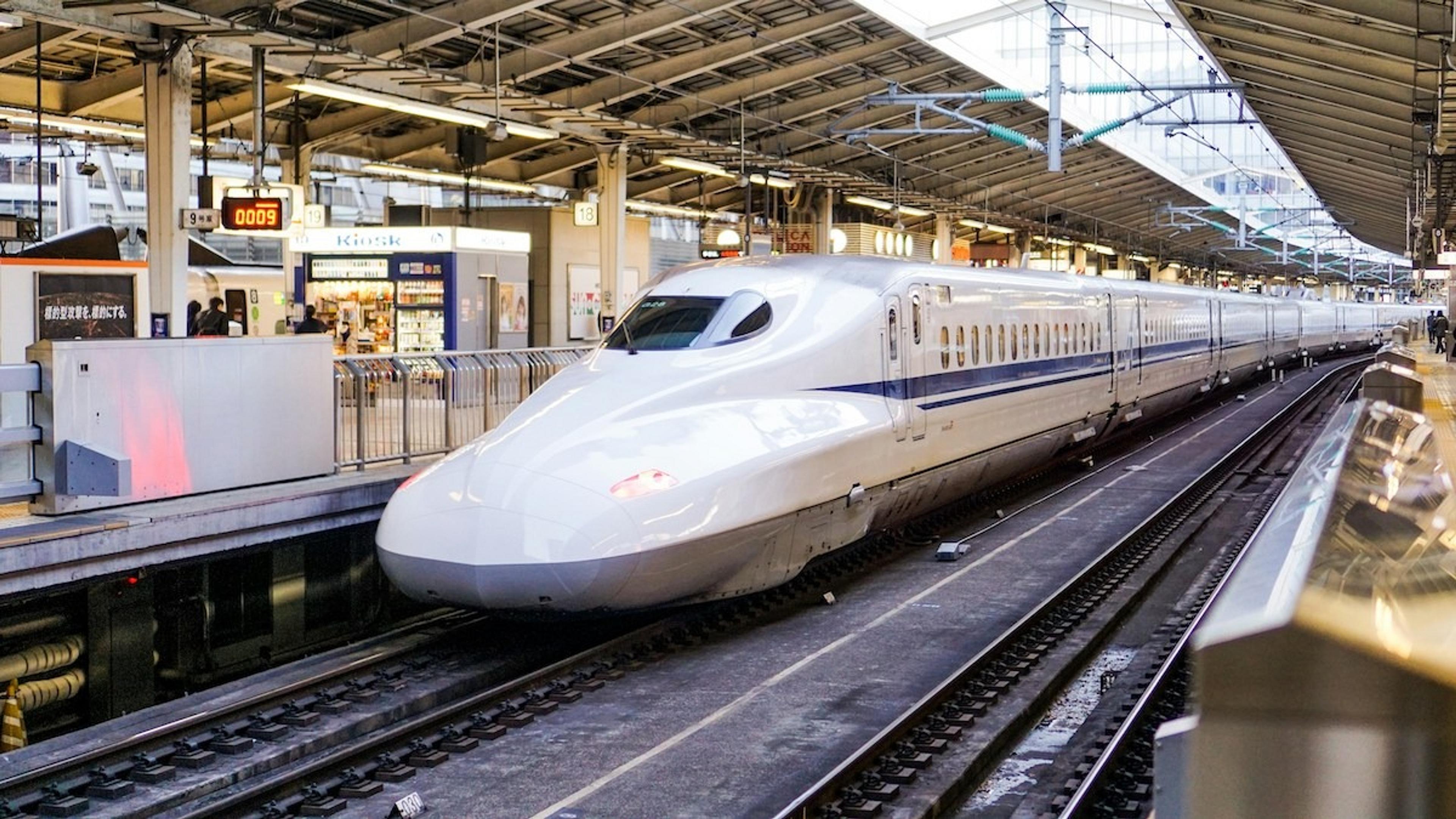
I arrived in Kyoto by Shinkansen from Tokyo (which is how most visitors get to the city). The journey took about 2-2.5 hours and cost about £70/€84/$98 (14,370 JPY) per person. We booked our tickets directly at the Shinkansen ticket machine in Tokyo Station about 30 minutes in advance.
There are generally 10–12 trains per hour, and they are either with Nozomi, Kodama or Hikari train services. Nozomi and Hikari trains tend to be express trains (with only 4–5 stops between the two cities), whereas Kodama stops at more than 15 stations. Because of this, you can expect them to take over an hour longer than the express trains.
You can catch the train to Kyoto from other major cities in Japan, too. Here’s how long it’ll take you, and generally, how much a ticket will cost (as of August 2025):
- Nagoya (35 mins) 6110 JPY (approx. $41/£30/€35)
- Osaka (45 mins), 570 JPY (approx. $4/£3/€3)
- Kobe (1 hr 20 mins), 3910 JPY (approx. $36/£20/€22)
- Hiroshima (1 hr 45 mins), 11820 JPY (approx. $80/£59/€68)
- Yokohama (2 hrs 20 mins), 13700 JPY (approx. $92/£69/€79)
- Fukuoka (2 hrs 45 mins), 16780 JPY (approx. $110/£84/€96)
- Niigata (5 hrs 20 mins), 22800 JPY (approx. $150/£115/€130)
Getting around
Metro and suburban trains
Similarly to Tokyo, you can get around the city center with the Kyoto Subway. There are 31 stations across two subway lines, and they’ll take you to most of the main sites in the center of the city, like Nijo Castle, Pontocho Alley and Nishiki Market.
To use the metro, you’ll need an IC card. These are contactless cards that you can preload with cash and use at the ticket barriers to enter the station. The same cards that work in Tokyo generally work here (e.g., Suica and Icoca). There are also Kansai-specific IC cards, like Pitapa.
Unlike in Tokyo, many of the main sites in Kyoto are a little further outside the downtown area and will require suburban trains outside the subway network. This will be the case for sites like Arashiyama in the west of the city, Fushimi Inari Taisha to the south-east, and many of the temples.
You’ll still be able to use your IC card, and pricing will be about the same (220-900 JPY depending on distance), but the main difference is frequency — the subway will typically come every couple of minutes, where you may be waiting up to 15 minutes for a train.
Buses
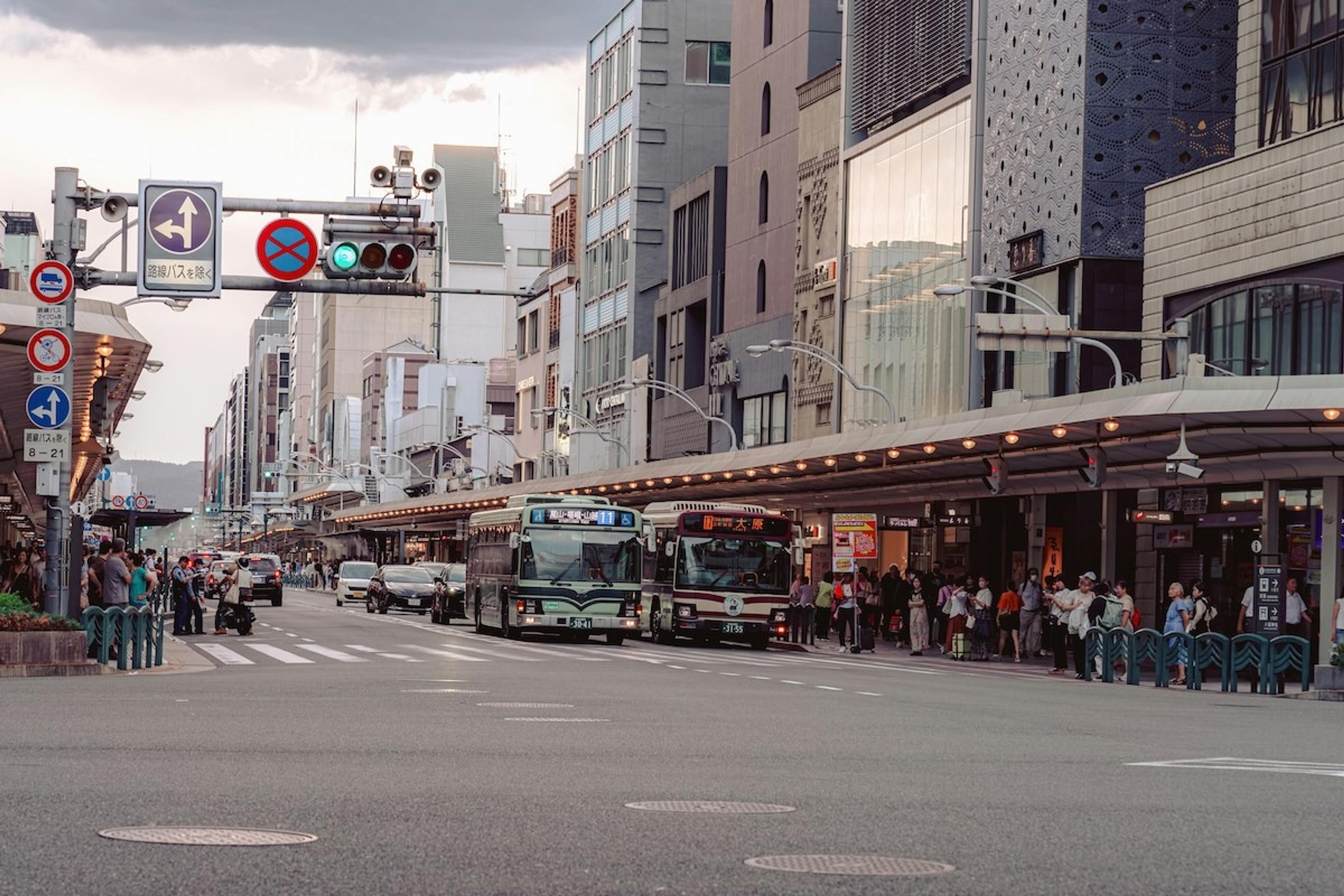
We used buses occasionally when we were in the city. We found the bus especially useful when coming back to the hotel from the end of the Philosopher’s Path, which isn’t anywhere near a train or metro station. There’s a flat fee of 230 JPY (approx. $1.55/€1.30/£1.15) and you’ll need exact change if you’re not using your IC card.
When you're waiting for the bus in Japan, you should line up on the footpath next to the bus stop until it arrives.
Read more about riding the bus here.
Seasonality
Kyoto is in the central chunk of Japan, which means its seasons are quite similar to surrounding cities, like Osaka and Tokyo. That being said, there are some slight variables, and specific festivals that you might want to keep in mind when planning your trip.
Spring — March-May
Temperature: 5-28 C/41-82 F
Spring is the most popular time to visit Kyoto, as it is around the country. Cherry blossoms are the biggest reason for that, with maps that help you predict the peak bloom months across Japan.
Alongside the usual sakura-flavored snacks and locals picnicking under the trees, Nijo-jo Castle hosts a famous Sakura Festival from mid-March to mid-April. Head there after 6pm for some spectacular illuminations of the cherry blossom trees!
Summer — June-September
Temperature: 18-35 C/64-95 F
The heat and humidity in Japan during summer are consistent and, at times, can be uncomfortable. Kyoto is no exception! This, plus summer tourism can make visiting during peak summer times less favourable than at other times of the year.
You'll experience taiko drums and decorated shrines in Kyoto to celebrate the season—Gion Matsuri at Yasaka Shrine in July is one of the biggest festivals, complete with wooden floats and a massive procession.
If you're there in August, the Daimonji Festival is a spectacular bonfire festival on the 5 mountains surrounding the city.
Fall — October-November
Temperature: 10-20 C/50-68 F
Kyoto is no exception to the beautiful autumnal foliage that drives visitors to the country during fall. Places like Eikan-do Zenrin-ji Temple have thousands of maple trees that turn red during these months. They even have light shows going on during the evenings because they believe it's something to truly celebrate!
The Jidai Matsuri festival on the 22nd of October is one of the biggest in the calendar—there's a parade demonstrating historical figures, followed by the Fire Festival in Kurama in the evening.
Unsurprisingly, you’ve also got plenty of festivals to celebrate the change in season.
Winter — December-February
Temperature: 4-15 C/39-59 F
My visit was in winter in 2025 - February to be exact. Many people believe it's going to be too cold to visit, but we actually found (except 1 very snowy day) that the weather was generally pleasant, with sunny days and mild temperatures. I believe January is colder than February, so you may have better luck (and fewer snow days) if you time your trip towards the end of winter. Despite the colder temps, the main tourist attractions in Kyoto (Gion, Arayshiama) were busy!
The best thing about visiting in February is the plum blossom festival at the Kitano Tenmangū shrine. If you attend on the 25th of February, expect to be given plum tea and dango to try, and you can walk around the grounds of the temple under the cover of plum blossoms. We also found a small street market outside the shrine with snacks and souvenirs on sale.
Area Guides
Below we’ll detail some of the most popular areas in Kyoto, but we can’t touch on everywhere. It’s a massive city, with lots to see and explore. If you want to save money on your hotel, I’d recommend staying in the western/more central part of town over a place like Gion. Yes, it’s less ‘vibey’, but it’s also much cheaper. And the transport around the city is absolutely efficient enough to get you where you want to go otherwise.
Pro tip
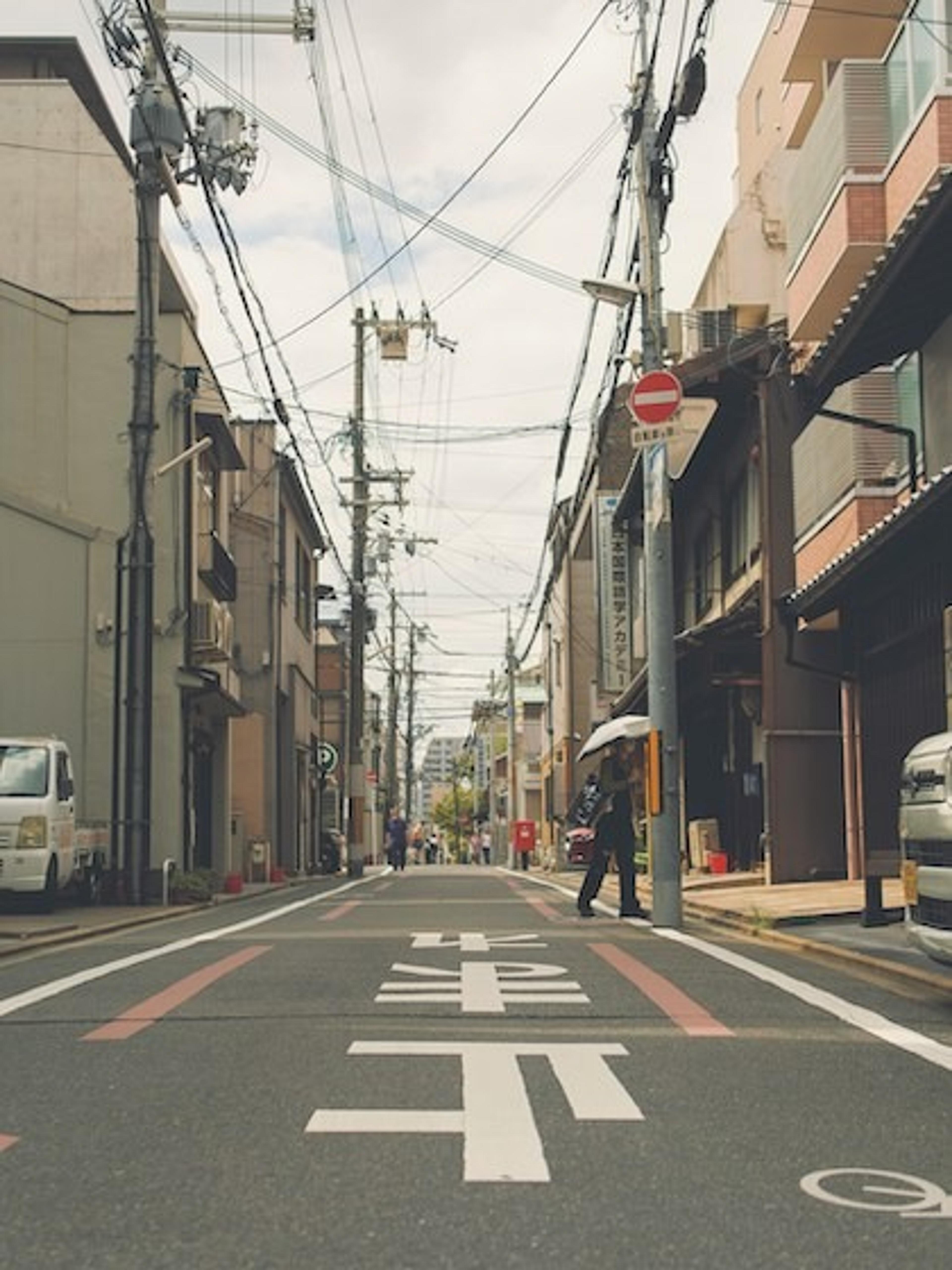
I stayed in the area between Omiya and Karasuma stations when I visited Kyoto and found it a great location. It was within walking distance of downtown and all the amenities/shops you might need, and on a main road with a bus that took us straight into the more historic part of the city. It also connects up to the main Kyoto Train Station, which is where you’ll come in from the Shinkansen.
Gion
Likely the neighborhood that’s highest on your list, Gion covers the area to the east of the Kamogawa River that splits the city in two. It’s also where Geiko and Maiko live and is the most ‘traditional’ neighborhood in the city. Expect wooden houses, narrow, winding streets, and plenty of visitors trying to catch a glimpse of the elusive women. It’s also where you’ll find the Kiyomizu-dera Temple, and with it, the most famous outlook over Kyoto.
My advice? Spend half a day walking around, visiting the temple and the Geiko and Maiko Museum (a really, really good glimpse into the lives of these women and the history of the art form; read more below), and then head somewhere else. While beautiful, it’s extremely overrun with tourists, and food and drink here will be expensive.
Cool Starbucks, though!
Pro tip
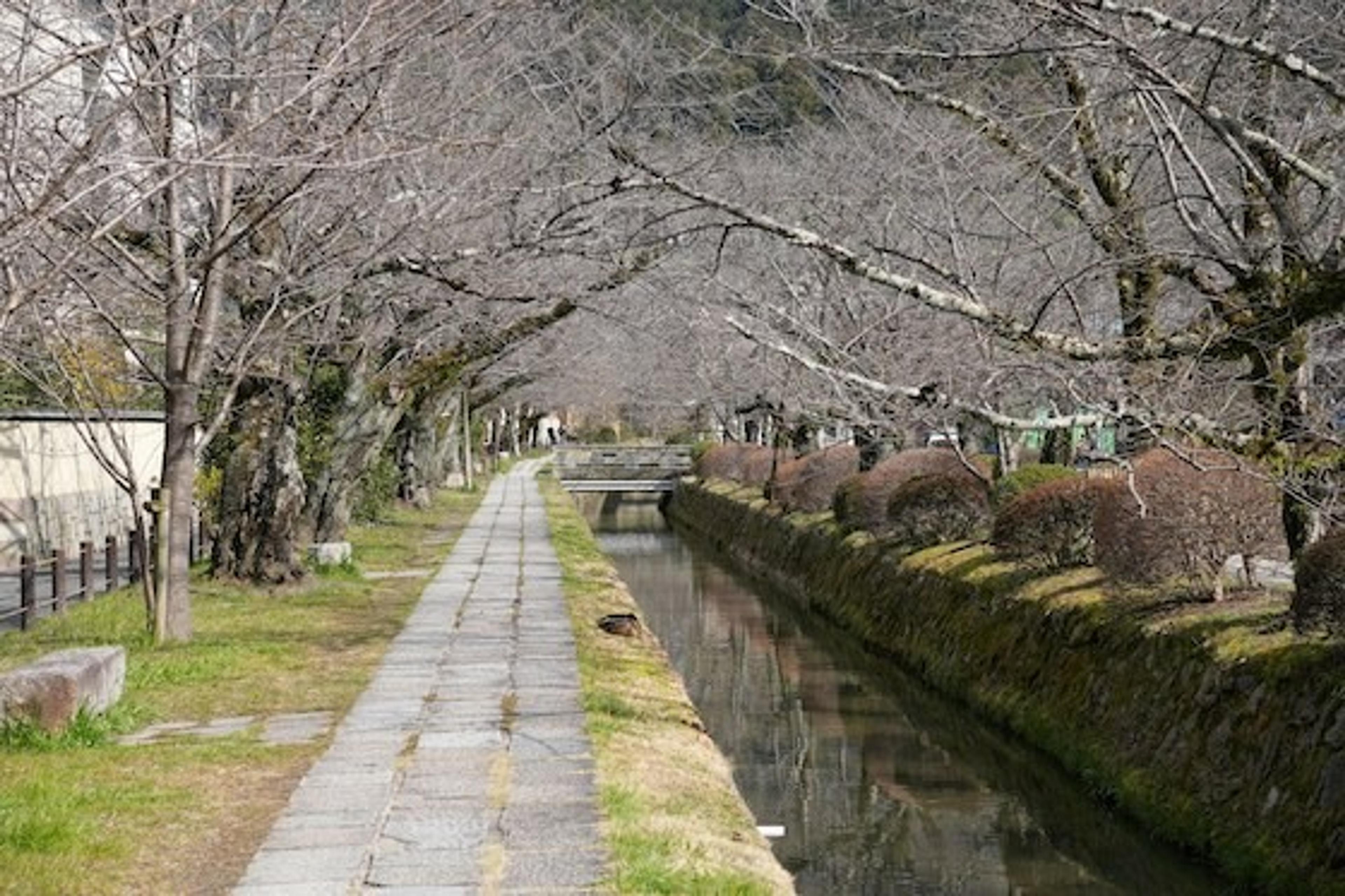
While you’re in the east of the city, head to the Philosopher’s Path. It’s in the Higashiyama District, and you’ll have to catch a bus to get there. But it’s such a tranquil walk, and not many visitors venture out there, so it’ll be way less crowded than other parts of the city. It’s a 2-kilometer walk among trees, along the river. A real standout for us.
Pontocho
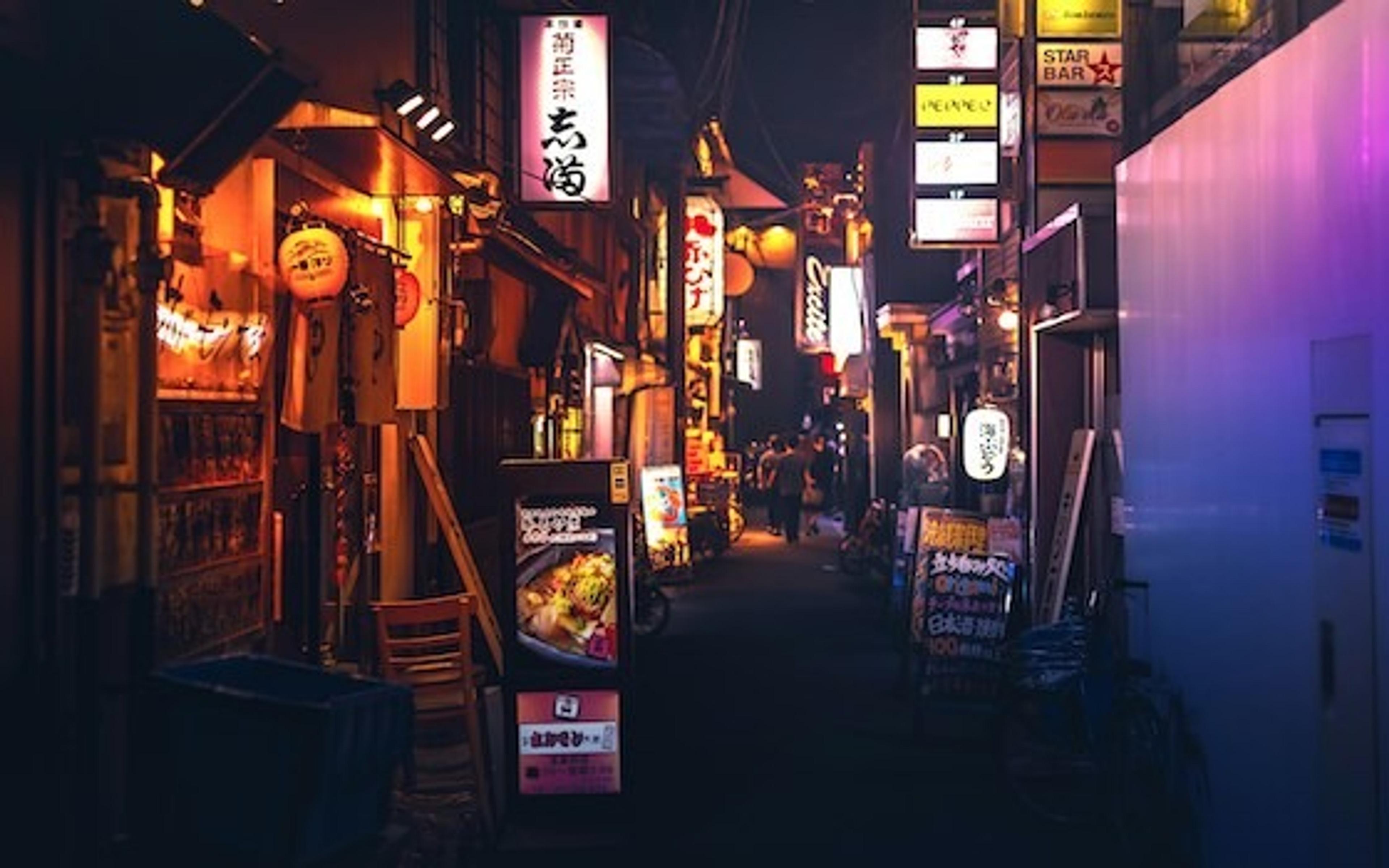
Pontocho is a small neighborhood on the western bank of the Kamogawa River that centers around one long alley. In and around this area is where you’ll find some of the best food in the city and a bustling nightlife.
The wooden buildings that flank the street are extremely photogenic, and you’ll find lots of tourists jammed into the alley, taking photos of lanterns and the like. The restaurants on the eastern side also have the added benefit of views over the river. If I went back, I’d definitely consider booking a food tour of this area to make the most of all the delicious dishes on offer.
We really enjoyed walking through and could have happily stopped for dinner at any of the izakayas or restaurants here. We ended up walking just around the corner for dumplings at Chao Chao Gyoza, but you can’t go too far wrong, no matter where you end up.
Arashiyama
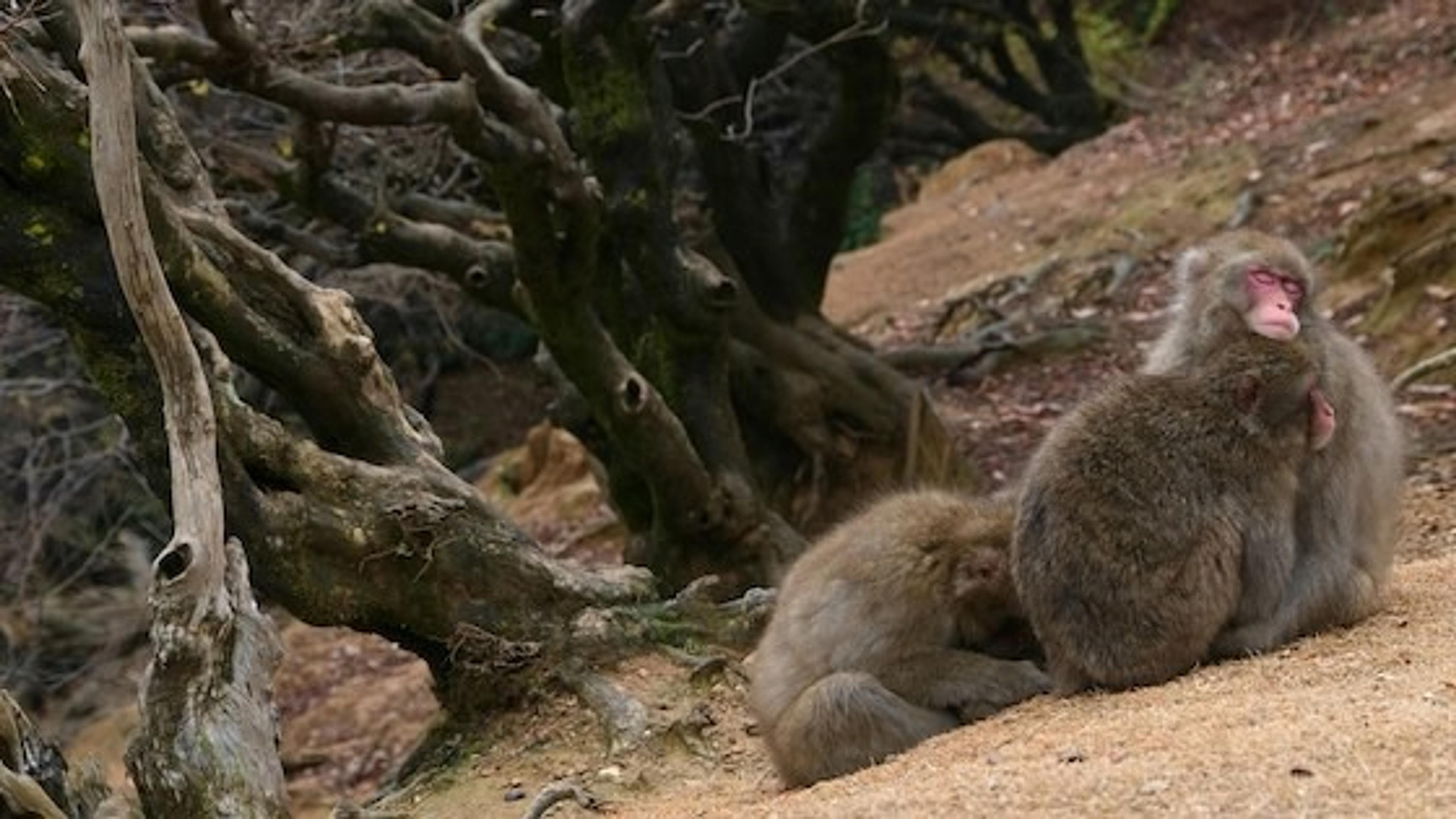
On the far west side of the metropolitan area, Arashiyama is known for 2 things: bamboo and monkeys. The famous bamboo forest is here (yep, the one you’ve most likely already seen floating around on socials), and there’s also the Monkey Park, home to the 150 or so Japanese macaques who live on Mount Arashiyama.
Here’s the rundown if you want to go to either of these places:
- You get there by train; it costs around 220 JPY (less than $2 USD) and takes about 15 minutes from central Kyoto. It runs all day, so you can easily spend the morning in Arashiyama before heading back into the city.
- The bamboo forest is free to enter, but beware the crowds—your best bet is to arrive early (before 9am) or go to the lesser-known Oharano Shrine instead.
- The Monkey Park is essentially a walking trail up and back down the mountain that you pay to enter. Once you’re in, you can take your time to get to the top (it is quite steep in parts and takes around 20–30 mins). At the top you’ll see great views of Kyoto as well as a gang of monkeys wandering around, looking for something to eat. You can buy special monkey food at the kiosk at the top of the mountain if you’d like, but there’s no obligation to. These are wild monkeys, so be alert and respectful when you’re interacting with them—you're a visitor in their home!
Outside the bamboo forest and Monkey Park, the village is small, with shops mostly geared towards tourists. We did have a pretty nice katsu chicken lunch at George’s Fried Chicken Curry while we were there, though!
Honorable mentions
Fushimi Inari Shrine—the spot with thousands of red torii gates where everyone needs to take their picture. It’s a little further out of Kyoto than the other sites, but it’s an easy train ride on the Keihan Main Line from Gion.
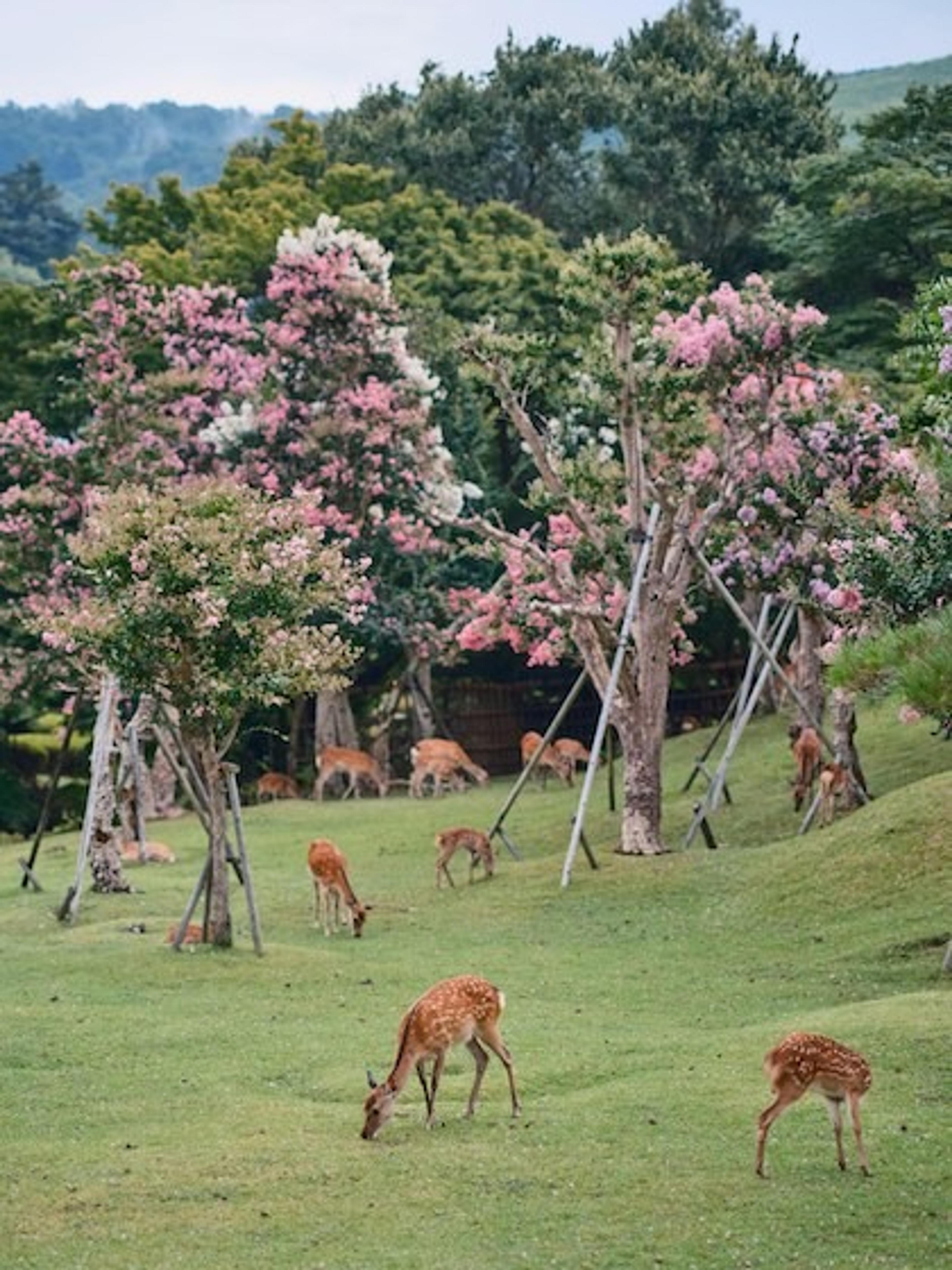
Nara—a common day trip from Kyoto—is the ancient capital known for its deer that roam freely in Nara Park. You can buy food for the deer, and they’ve been known to ‘bow’ once they’re fed. While you’re there, there are also temples to visit, including the Giant Buddha, Kasuga Taisha Shrine, Kofukuji Temple, and the Nara National Museum. The train to Nara from Kyoto takes 30 minutes.
Geisha IRL: Geiko, Maiko and the performing arts
If there’s one word that’s associated with Kyoto in the western world, it’s ‘Geisha’. This profession is unique to Kyoto, and comes with hundreds of years of culture and history.
While fetishised overseas, Geisha are not what many people think they are. In real life, these performers are known by the terms Geiko (or Maiko, an apprentice Geiko). They live an extremely demanding lifestyle, learning skills of dance, playing instruments, and the art of conversation, which take years to master. While they do entertain visitors in tea houses around Kyoto, they do so in groups, and as a tourist, you’re unlikely to see them in action.
The Geiko and Maiko live in okiya (boarding) houses, which you can find in the Gion district (these houses are easily spotted by the wooden nameplates over the door of each Geiko and Maiko living in that house). There are estimated to only be 100-150 Geiko practicing in Kyoto, a real decline in from their peak population of 80,000 in the 1920s.
FYI, If you’re lucky enough to see a Geiko or Maiko walking around, it’s best to admire them from a distance, and put your phone away. There has been backlash in recent years of tourists taking unsolicited photos of Geiko and Maiko on the streets of Gion.
If you’d like to learn more, the newly opened Gion Kagai Art Museum is your best bet. You’ll find out all about the many years of training these women go through, see different clothing items worn during performances (including beautiful kimonos), watch videos of real-life Geiko speaking about their lives and explaining the art from their own perspective.
You can also pay to watch a 15-minute performance with a practicing Geiko and Maiko, which I can highly, highly recommend. Admission is 3,100 JPY (or about £15/€18/$20).

Larissa's Pro Tip
If you're looking for Geiko or Maiko on the street, you'll see lots of visitors dressed up in the typical dresses, taking photos at temples and on the street, so don't be fooled. In the wise words of my tour guide, “if you have to ask yourself ‘is that a real Geiko?’, they definitely aren’t”.
Kabuki Theater
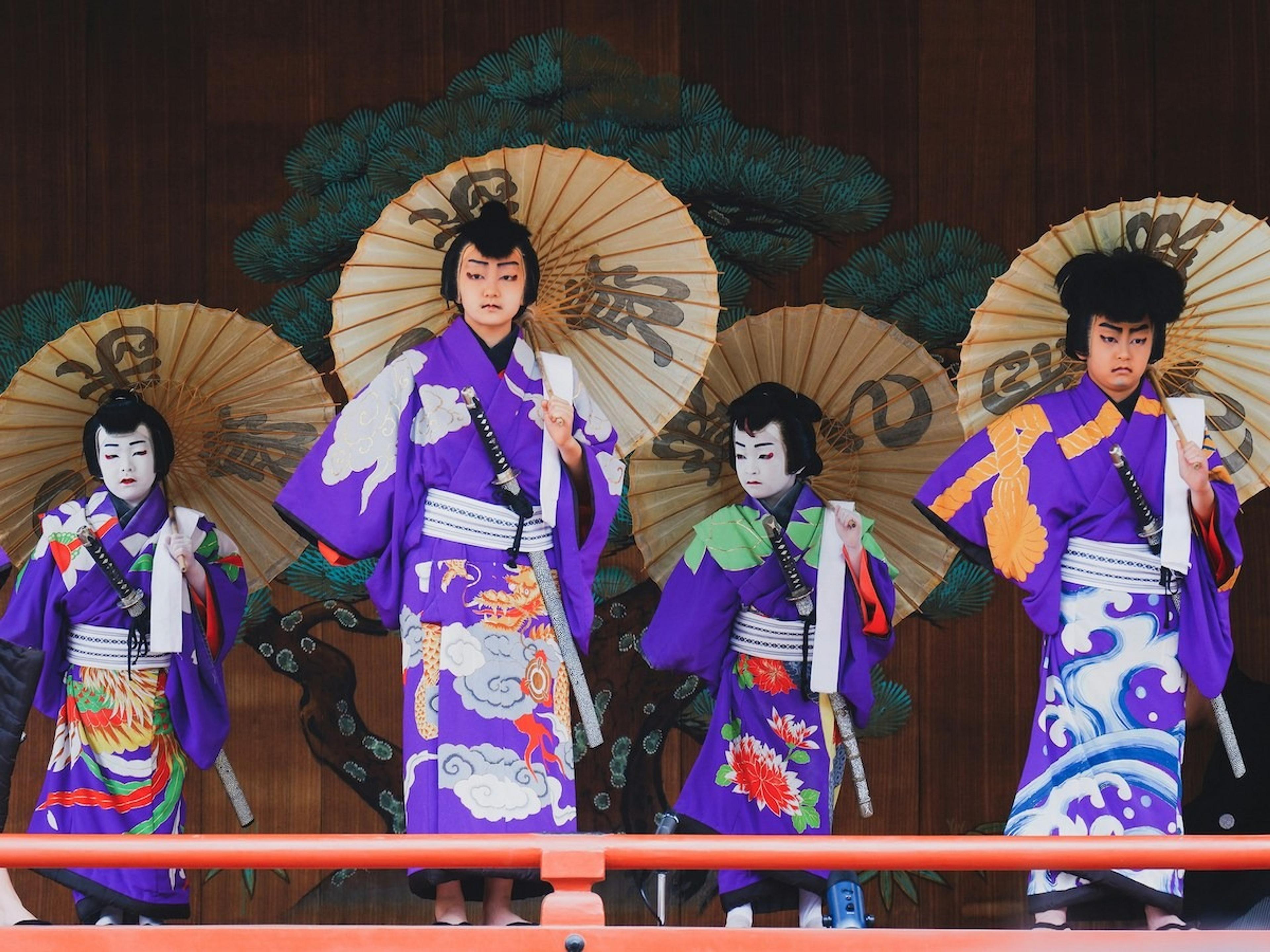
Kabuki Theater is another performance art that has become famous across Japan and the world. The performers wear masks and perform scenes of moral conflicts, traditions, and Japanese legends.
Plays are usually around 3–4 hours long and don’t have English subtitles or audio guides, so they're not as accessible as other performances you may be used to. If you’d like to get a taste of a show but don’t want to sit through a whole play, buy a ‘Single Act’ seat, which is usually only 30 minutes.
If you’d like to see one, your best bet is to go to Minamiza Theatre in the Gion district.
Food
Influenced by its proximity to Uji’s famed matcha fields, Kyoto is one of the best places to try all things green tea—matcha sweets, matcha lattes, and ceremonial-grade cups of matcha. You name it, you can find it.
It’s also a great place to find more traditional dishes, like soba, tofu, and all sorts of vegetarian delights, including pickled vegetables.
Here are some typically Kyoto foods and drinks you ought to try while you’re there:
- Tsukemono: pickled vegetables, which you can easily find in Nishiki Market
- Soba: buckwheat noodles in all kinds of flavors, including green tea! Sometimes served cold, so be aware of what you’re ordering.
- Yuba: tofu skin served in various ways, like added to soup or as a fried side dish/snack in the form of tofu skin chips
- Saba-zushi: a raw mackerel sushi, different from Edo-style (Tokyo)
- Matcha: green tea powder, drunk hot or cold
- Sake: the soft water in Kyoto is some of the best for sake production in the country—look out for brands like Gekkeikan (one of the oldest breweries in Japan), Sho Chiku Bai (known for its sparkling sake), and Tsuki no Katsura (specialising in cloudy sake).
- Obanzai: home cuisine, usually small dishes heavy on the vegetables and soup
You’ll also find cuisines from all around the world, but less so than in Tokyo. For example, we were feeling like a break from Japanese food and found this highly rated burger spot. The food was delicious, but it was extremely busy (likely because there weren’t many other burger spots nearby) and there was no space to eat in, so we had to take our food back to the hotel.
Nishiki Market
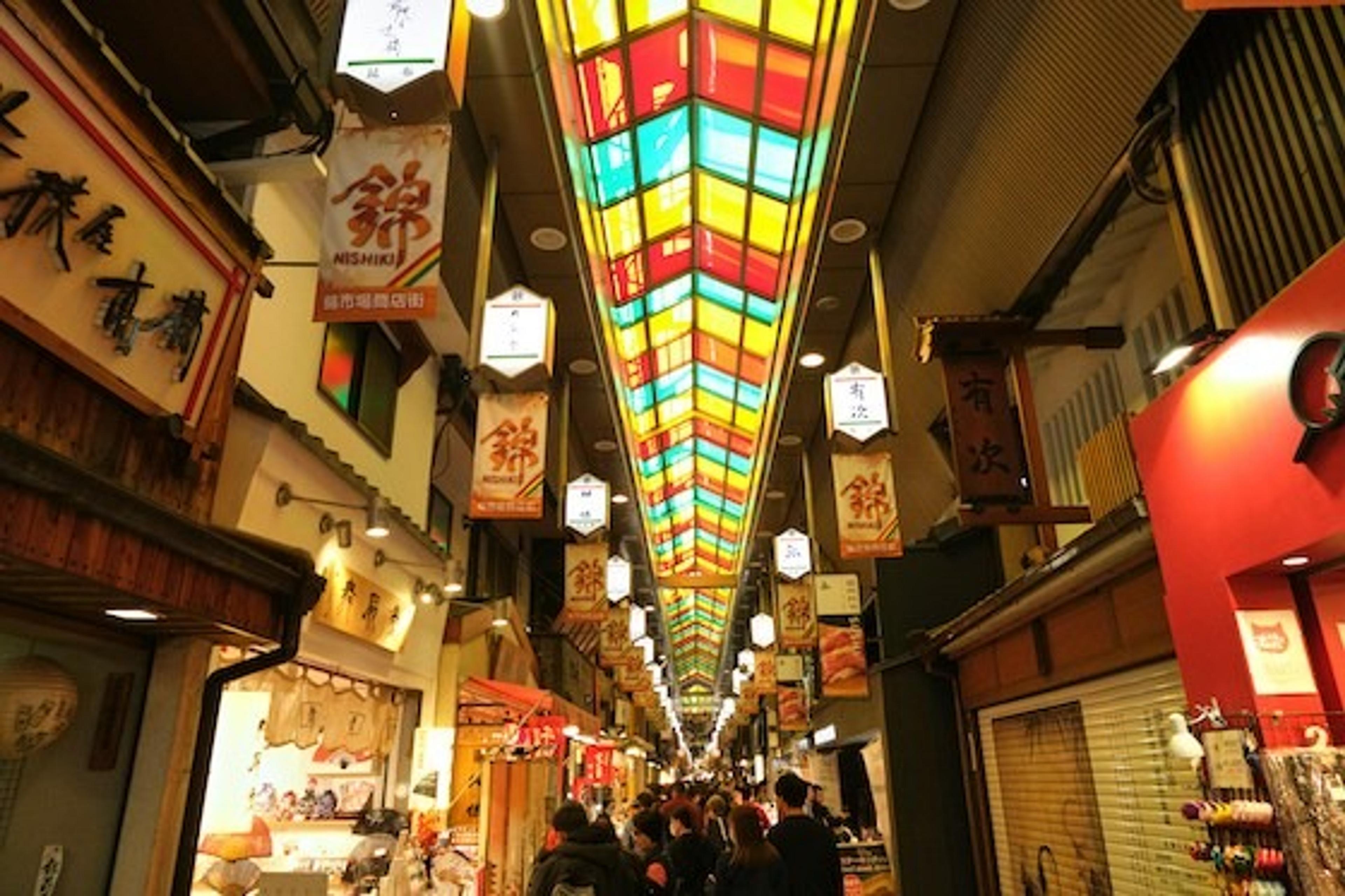
Known as ‘Kyoto’s Kitchen’, Nishiki Market is the biggest and most popular food market in the city. There are alleyways upon alleyways of shops and restaurants selling anything from takoyaki balls (fried octopus) to raw seafood, vegetables, meat skewers and sweets.
The market is covered, so don’t let the weather dictate your plans there. But, with every popular spot in Kyoto, you’ll be rubbing shoulders with hundreds of other visitors, so expect it to be loud and busy. Some shops selling food do have standing room to eat it, but some don’t, so you may be taking food back to your hotel to eat later or be forced to eat it quickly before moving on (remember, eating in public isn’t the done thing).
Just like in Tokyo, street food isn’t really a ‘thing’ as it is in other countries. Yes, some areas will have bites you can buy on the go, but locals would rather eat a casual snack in an izakaya rather than sit in a stall on the side of the road. The only exception to this is during festivals, where temporary food stalls are set up for visitors. For the best izakayas, check Tabelog for the highest-rated spots, or let your nose direct you down narrow alleyways.
Useful links
If you'd like my top apps and websites to use on your trip to Kyoto, check out my guide to Tokyo.